Friday, October 18, 2013

Year of the Snake - No.42 Mojave Rattlesnake

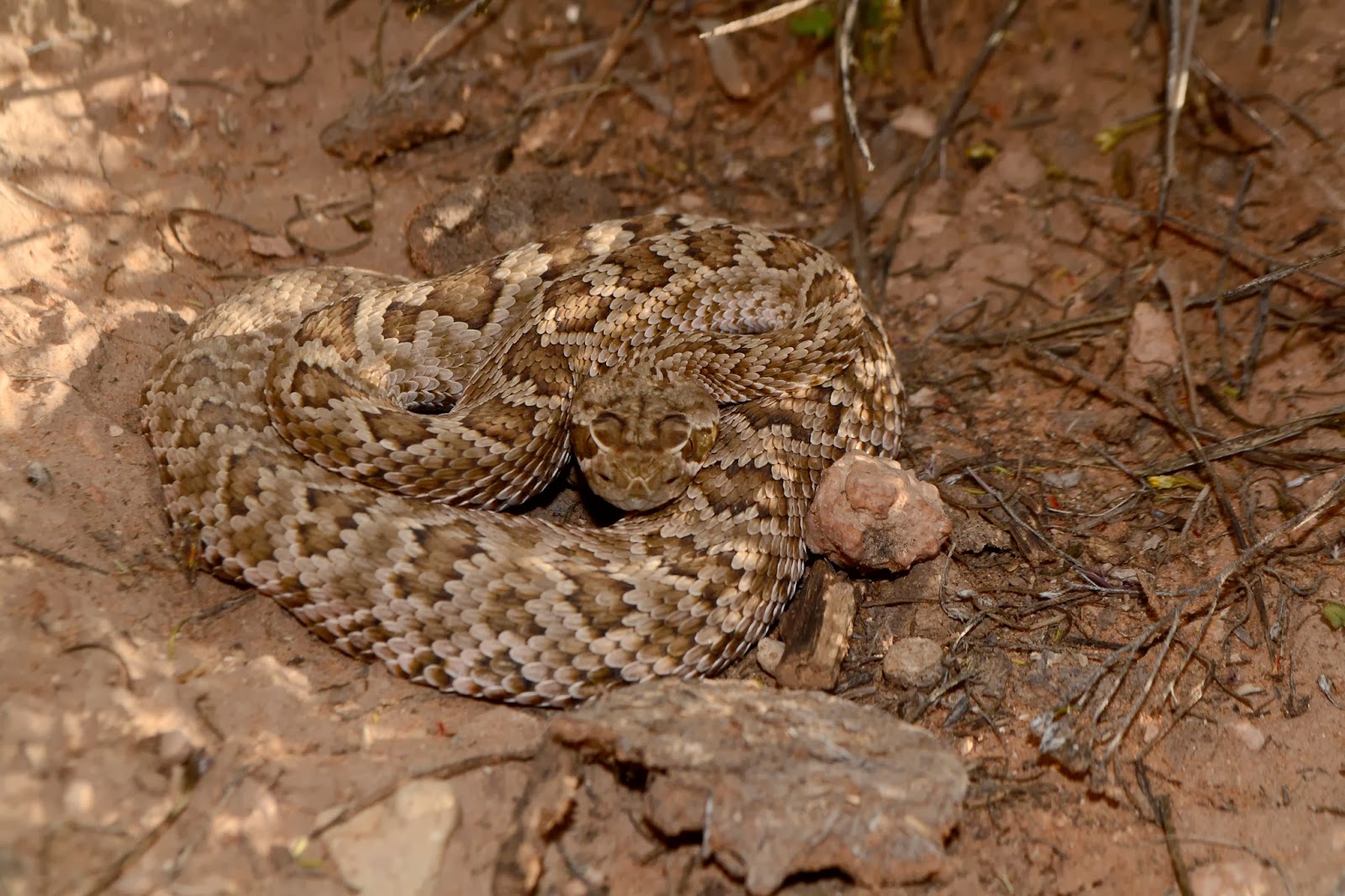
Crotalus scutulatus
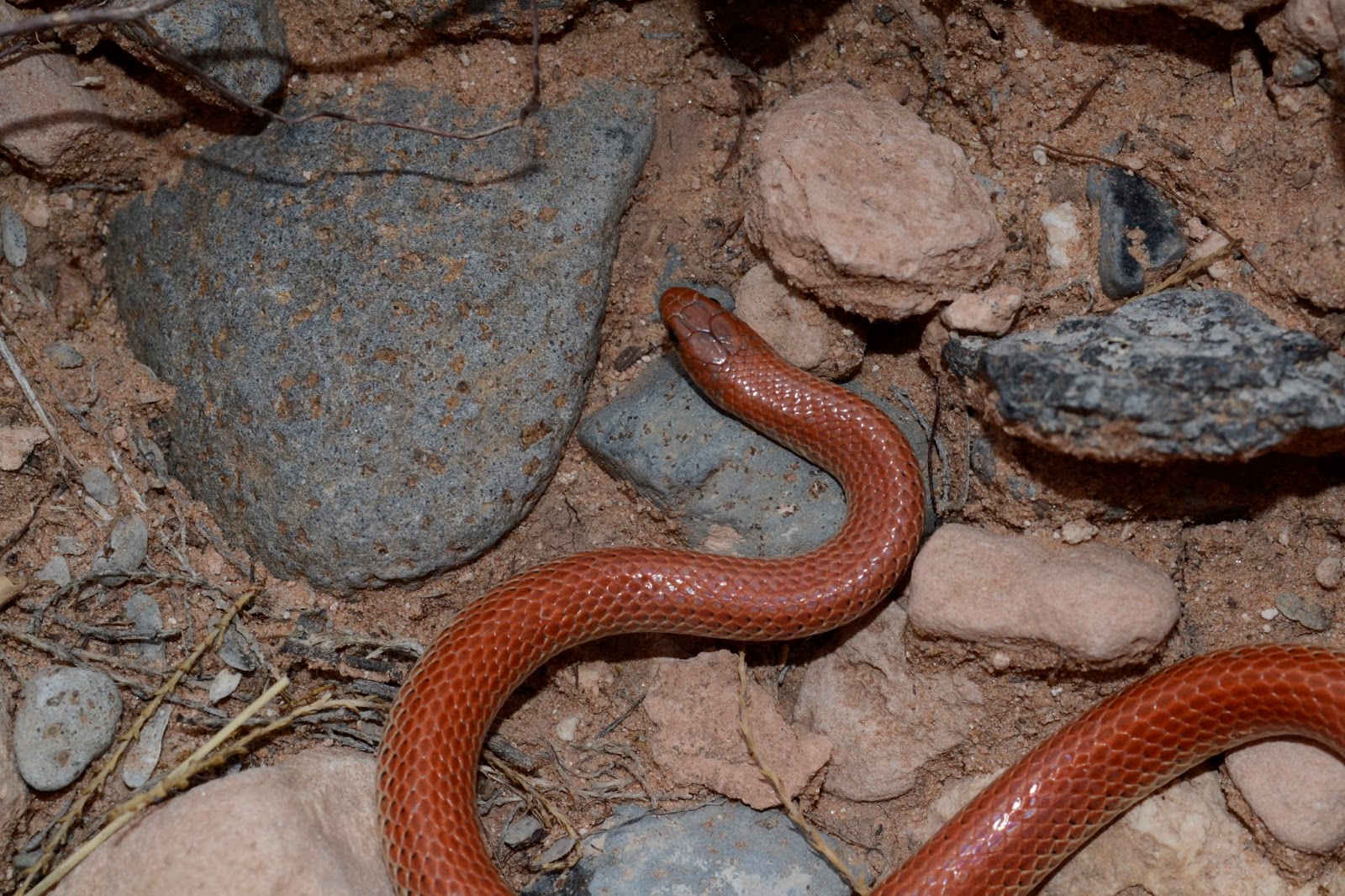
Mojave rattlesnake (or mohave) in lizard trap of death
When I go hiking in the desert near our house, one of my favorite spots to check for reptiles is the "Lizard Trap of Death," a pipe that comes out of the ground with a metal lid on it.  They go under the lid to get away from the sun, fall into the pipe and can't escape. So I usually check the pipe so I can rescue any lizards trapped there.

Recently, my dad, my friend Jack and I went out to check it. When my friend moved the lid, we heard a buzzing from inside the pipe.

We looked in and there was my first Mojave rattlesnake.

These are my favorite snakes in the world. They are very pretty and some scientists consider them to be the most dangerous snakes in North America. They have a very interesting venom that changes depending on their range. In some places it is neurotoxic (nerve-affecting) venom. In others, it's hemotoxic (blood and tissue-affecting) venom. And in some places, it is a combination of both in the same snake!

This was a pretty young snake. It was old enough to rattle but not very long. He seemed very angry when we first lifted up the lid. But he calmed down later. He was rescued with a snake hook, photographed, and left to be.


Monday, October 14, 2013

Year of the Snake - No. 41 Juvenile Western Diamondback

Crotalus atrox


On September 19, I went out to do my usual rock-flipping patrol -- we have a lot of rocks around the house and I go out to turn them regularly. I hadn't found any snakes under those rocks but I usually find a scorpion or two.

I turned over a rock and saw a tarantula in a cocoon. I knelt down to pick it up. I looked to my left and saw--just 5 inches from knee--this pretty, little diamondback. It was an example that snakes aren't all out to get you, because I was within easy striking range.

We kept checking on him all day. Later, we decided to capture him to show to our homeschool co-op. We kept him for a few days then released him further from the house.

I hope that showing him to the group helped lessen their fears about snakes.

The snake was about 12 inches long. He was a neonate, and could not even rattle yet.

Friday, September 27, 2013

Year of the Snake - No. 40 Juvenile Coachwhip

Masticophis flagellum is a diurnal (day) snake so it has excellent vision, as you can see from its large eyes. It is one of the few snakes you can find out during the day in the middle of the summer.


This is the fourth coachwhip I have seen this year. My sister Clara turned over a rock next to our house and found this one coiled underneath. When we tried to catch him, he reared up and struck many times. Eventually, we caught him and put him in a terrarium.  He is a very young snake, only about 12 inches long. We kept him for a week, then released him. 
I've also seen two adult coachwhips this year, but have not been able to get close enough to catch them. One I saw at a friend's birthday party -- a red streak disappearing into a bush. The other one I spotted from 20 feet away, too far to catch.

If you are interested in handling cobras or mambas, coachwhips are good practice. They are large, fast, and try to bite every time you pick them up.


Thursday, September 26, 2013

Year of the Snake - No. 39 Sonoran Coralsnake

Micruroides euryxanthus
My dad and I were out on the back porch one evening about 7 p.m. I was trying to take a picture of lightening since it was the monsoon season. I was concentrating on the horizon when my dad said, "Hey, there's a snake!"

When I looked at it I was shocked to see a Coralsnake. I yelled, "It's a Coral!" I dropped my lens cap and ran inside to grab my small hook. We chased him around for a few minutes before scooping him up into a small plastic container.

This is the first one I have ever seen. I was surprised to see it because I wasn't sure their range came this far north. They are very pretty snakes, and are members of the elapid family (related to cobras, mambas and kraits).

This one was full-grown at about 15 inches. They are long and thin snakes with a very small head. Their venom is supposed to be 10 times as toxic as a king cobra's. But they are very shy, non-aggressive and you are lucky if you ever see one.

We kept him in a terrarium for a few days and showed him to our homeschool co-op. Then released him.

This coralsnake helped me win a dollar from a friend's dad who doubted it was a true coral snake. He has lived in the area for 38 years and this was only the 3rd coralsnake he has seen.

Some mimics of his pattern include Arizona Mountain Kingsnake and Shovel-nosed Snakes.

The Sonoran Shovel-nosed is probably the hardest to tell from it because the popular rhyme ("Red touch black, venom lack) doesn't apply. The Coralsnake has a black snout though. And the Sonoran Shovel-nosed has a very limited range.

Probably, the coolest find of the year. This one is worth 10!


Tuesday, September 17, 2013

Year of the Snake - No. 29 -38 - Rough Green, Queen & Watersnakes

Opheodrys aestivus

Regina septemvittata
We took a trip to visit our grandparents in Mississippi and our cousins in Tennessee. We found quite a bit.

No. 29 - Rough Green Snake
We found this snake after a very interesting hike at Noxubee Refuge. We had already seen an alligator, anole lizard, 20 toads, a mud turtle, a fence lizard and an unidentified skink.

Robert spotted this snake at eye-level in a bush after we walked past it. It looked completely like a vine. We picked him up and he didn't bite at all.

No. 30 - 33 - Queen Snake
We found several of these in a creek by our cousin's neighborhood in Nashville. On the first day I went out, I turned over a large flat rock and underneath was the Queen Snake and Northern Watersnake. I took them back to the house for photos and released them a few minutes later. When I went to release them, I also saw a big snapping turtle.
Nerodia sipedon will bite and hang on.

No. 34 - 38 - Northern Watersnakes
Unidentified salamander:
Let me know if you know which species this is. 
We found three of these at the same creek in Nashville. A couple were found under the same rocks as Queen Snakes. These are very agressive. When I picked one up, it latched onto my hand and held on. But they are probably some of my favorite snakes. I like their colors and habitat. And they bite, which makes them more exciting to catch.

We also saw several of these at Owl's Hill Nature Sanctuary outside Nashville.

Other Reptiles:
These photos are from the Nashville Zoo and Mississippi Museam of Natural Science in Jackson.

Collared lizard at Nashville Zoo.
I like the blur of the lizard's movement.

Mexican tiger rat snake at the Nashville Zoo.

Eyelash viper at Nashville Zoo.

Crotalus atrox at Misssissippi Museum of Natural Science.


Tuesday, September 3, 2013

Honorable mention: Groundsnake

This Sonora semiannulata was the biggest groundsnake I had ever seen.
My aunt Julie caught this 10-inch groundsnake in her backyard in Phoenix. Besides being beautiful, she was pregnant. Her body appeared very swollen toward the tail. After we had her for a few days, she laid four eggs. We have had them for a while, and unfortunately they have not hatched.

Earlier this year, our cousins also found a very pretty kingsnake in their yard, which they shared with us.

Although they live in the city, they have great luck finding snakes!

Year of the Snake - No. 27 & 28 Black-necked garter snakes

In early August, we found this juvenile garter snake in the wash on the way back from the creek. My dad also caught an adult on the road one morning.

Thamnophis cyrtopsis